
Understand what has really been explored.
Before committing to a new programme, acquiring ground or revisiting a historical prospect, understand what past explorers actually tested. RadiXplore reconstructs exploration histories from supported reports and records so teams can distinguish completed work from unresolved geological questions.
The problem with inherited exploration history
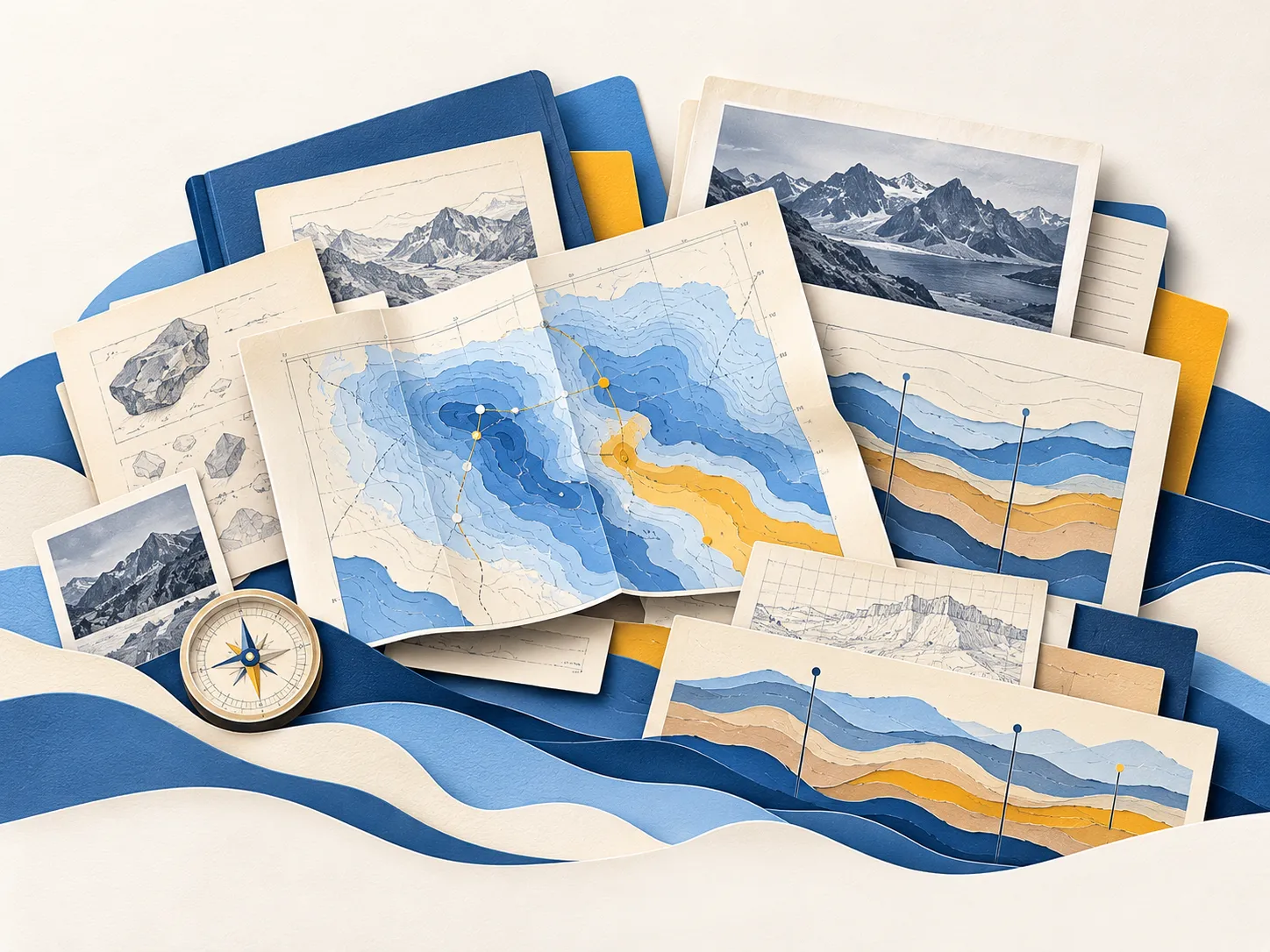
One project can contain decades of reports from different operators, overlapping targets, changing commodity priorities and conflicting geological interpretations.
A report may say that an area has been explored, but that does not tell you whether a particular geological idea was tested adequately - or whether the result would be interpreted differently today.
What RadiXplore reconstructs
RadiXplore investigates historical exploration records to understand:
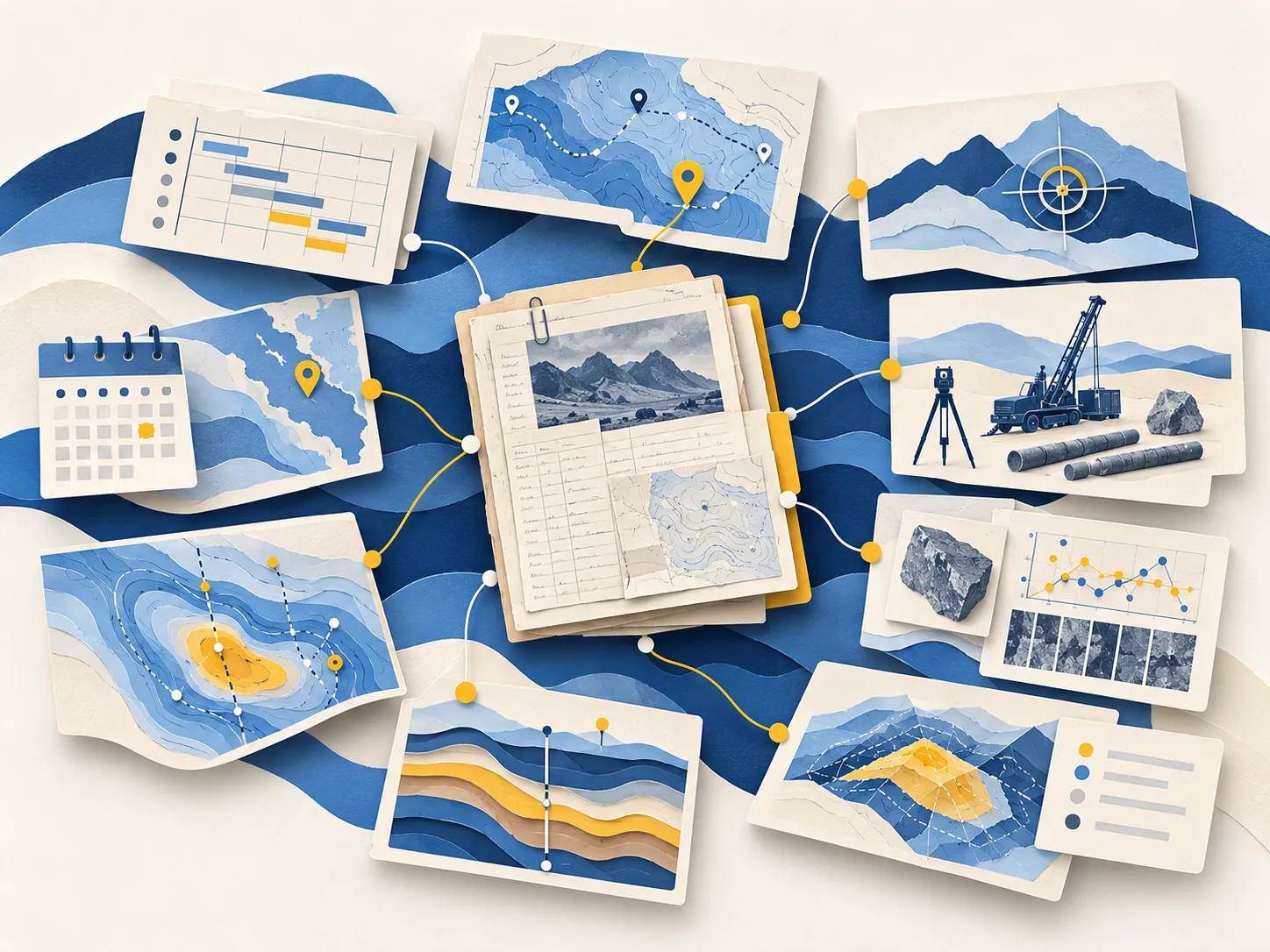
Work undertaken
What was planned and conducted
Where and when
Where and when exploration programmes occurred
Exploration intent
What explorers set out to investigate
Methods and targets
Which methods and targets were used
Observations and results
What was observed and reported
Interpretations
How exploration outcomes were interpreted
Unresolved questions
What was recommended, deferred or left unresolved
Know what's documented. Know what's inferred.
RadiXplore connects historical evidence to its original sources, helping you distinguish documented facts from interpretations and inferences.
Understand what's known, what's uncertain and what deserves a closer look.
Start with a structured evidence base
A Stage 1 Historical Evidence Recovery engagement establishes a clearer picture of the historical work before more expensive or interpretive analysis is undertaken.
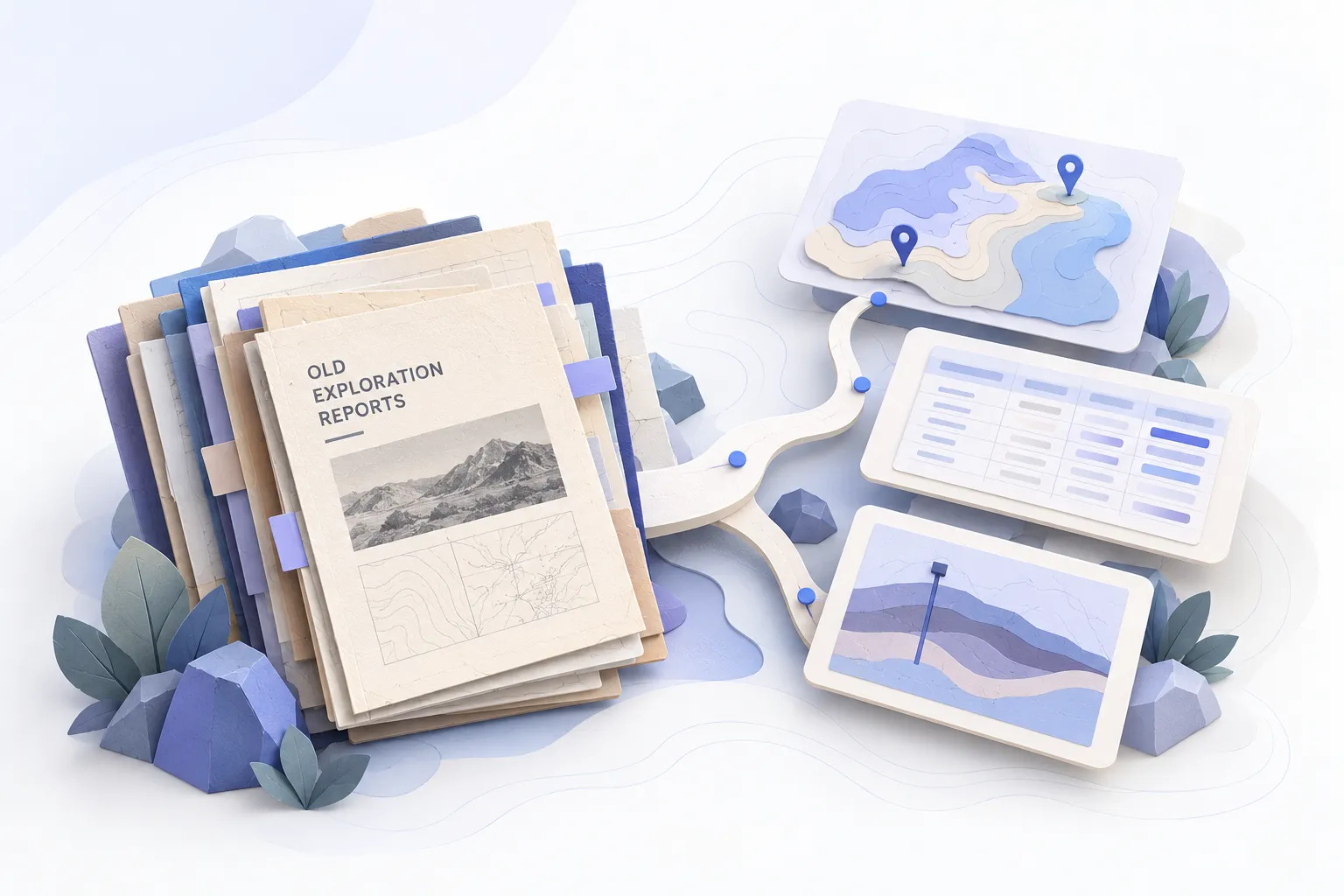
Depending on scope, outputs may include an exploration chronology, source-linked activity inventory, maps or evidence tables and unresolved-question register.
What comes next?
A reconstructed history can reveal important maps or assay tables worth recovering, conflicting historical interpretations worth investigating or areas where the original testing was insufficient for the geological question.
RadiXplore can support progressively deeper analysis through its bespoke exploration workflow, subject to the scope and evidence available.
Frequently asked questions

Take the next step
Make your next exploration decision with a clearer history.
Explore what the historical evidence can establish before your next programme.
Discuss your project